
The Toledo City Paper depends on readers like you! Become a friend today. See membership options
One of nature’s most amazing phenomena returns to the Northwest Ohio & Southeast Michigan region each spring, attracting tens of thousands of visitors from all 50 states and more than 50 countries.
And this spectacular event is free, open to the public, and easy to observe.
Those legions of people come here to witness the migration of millions of birds that use the sky above the area as a superhighway connecting their wintering grounds in the southern climes with nesting sites in the forests of the northern U.S., Canada, and the Arctic.
When these birds – warblers, shorebirds, raptors, waterfowl, fly-catchers, thrushes, vireos, finches, and more – pass through our neighborhood, they will frequently stop to rest and refuel before crossing Lake Erie and continuing their journey. This respite provides us all with the unique opportunity to see these often colorful and melodic birds up close.
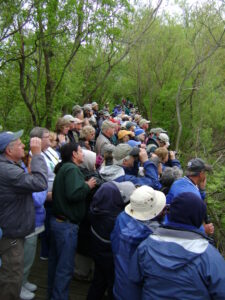
Mark Shieldcastle, a retired Ohio Division of Wildlife avian biologist, said that although this mass migration of feathered flyers has been going on each spring since the last ice age, it has been in just the past few decades that the huge gathering of birders and wildlife watchers have taken advantage of our front-row seat for viewing this remarkable event.
“The birds are there for anyone and everyone to enjoy,” he said. “And we see more and more people coming out to see the birds every spring. In short – birds make people happy.”
Shieldcastle now works as the research director for the Black Swamp Bird Observatory, a non-profit based near Toledo that combines its conservation and research initiatives with an effort to grow the ranks of birders. The group puts out a clarion call that birding is not an exclusive club at all – they swing the doors wide open and invite the masses, including the youngest and older folks out there, the curious, and those looking for a new outdoors endeavor.
RELATED: Restore the Block: How One Toledo Initiative Is Reviving Neglected Properties and Rebuilding Community
Kim Kaufman leads the Black Swamp organization and heads its role as host of the “Biggest Week in American Birding” festival based at Maumee Bay State Park each May. She said first-timers receive special status during the spring marvel.
“There are many free programs and guided walks offered as part our commitment to diversity, inclusiveness, and equity in birding and bird conservation,” she said. “We make every effort to help all people fall in love with birds.”
There are bird identification workshops, guided birding trips, daily guided field trips, and keynote presentations for registered participants in the festival, but each day there are also multiple free events open to the public. These include guided tours along the world famous boardwalk at Magee Marsh where the trees are filled with warblers, and in Pearson and Wildwood Metroparks, Ottawa National Wildlife Refuge, and Metzger Marsh.
Information on the spring migration event, overviews of the top birding sites, maps of many birding areas, a list of the birding hotspots in the region, and a full schedule of every guided tour, lecture, and workshop is available at the www.biggestweekinamericanbirding.com and the www.bsbo.org websites.
Kaufman added that experienced birders are everywhere during the migration period and they are always anxious to share their knowledge with anyone new to the activity.
“We’re thrilled to be a part of something so extraordinary — for people and for birds,” she said. “Our mission is to make everyone feel welcome in the birding community, where we all enjoy this incredible part of nature and support for bird conservation in the process.”

