
The Toledo City Paper depends on readers like you! Become a friend today. See membership options
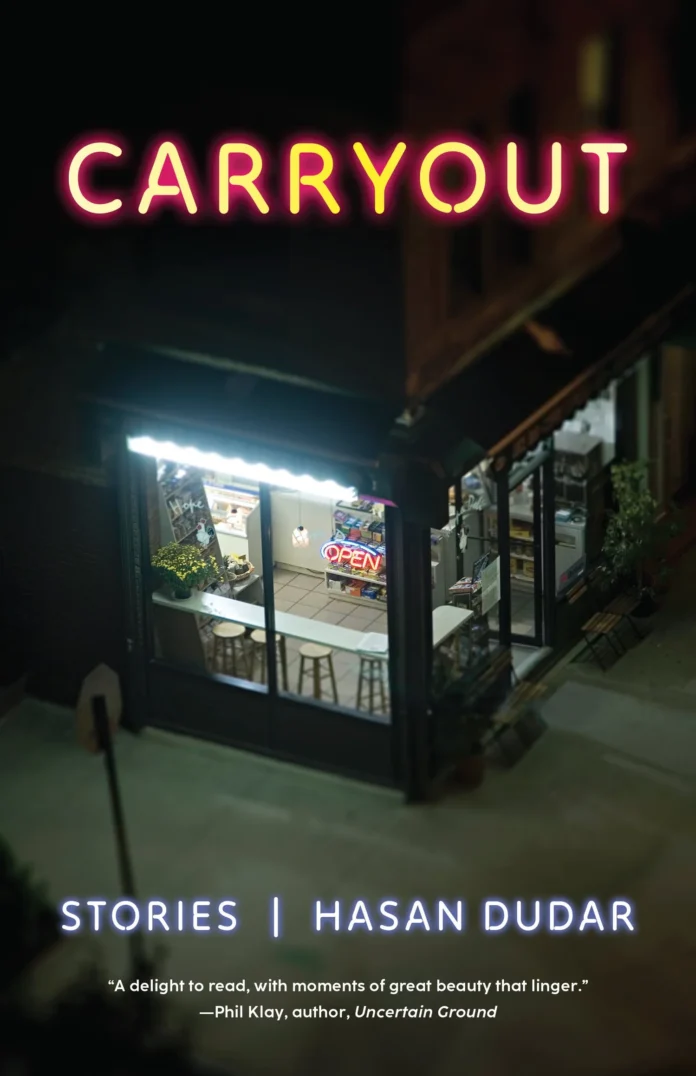
On May 5, the University of Iowa Press will release Carryout, a debut collection of linked short stories by journalist and writer Hasan Dudar. Tender and funny, the book traces the life of a Lebanese-Arab American family in Toledo, across generations.
Set in the late 1970s, Carryout opens with Ziad Idilbi, a Palestinian refugee from Lebanon, marrying Salma, a Lebanese refugee fleeing war in Beirut. Determined to start over they open a corner store across from the General Motors factory, where Toledo’s Arab community intersects with the city’s working class. It’s a humble beginning, but one that becomes the gravitational center of the story.
A city as character
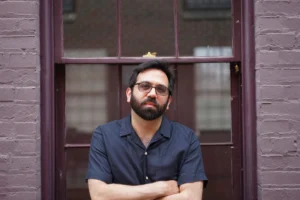
Dudar, who was born and raised in Toledo and now lives in Washington, D.C., says his hometown is inseparable from the stories he wanted to tell. “In some ways,” he explains, “this story could only have been told in Toledo.”
Growing up in the Arab/Muslim communities that took root in northwest Ohio over decades, forming communities from people who arrived for different reasons — fleeing war, pursuing education or seeking opportunity — who then built businesses, mosques, cultural centers and tight-knit neighborhoods. Toledo, Dudar demonstrates, welcomed them.
But Dudar also felt limitations, growing up in the 1990s and early 2000s, as he experienced both belonging and the disorienting weight of national suspicion following 9/11 and the Iraq War. “[My] identity was forming at that age,” he reflects. “You start to feel a lot of weight — like you have to answer for things.” That tension between comfort and precarity, rootedness and displacement pulses through Carryout, especially for the children.
RELATED: Neighborhood Voices Project to Bring Visual Arts to Englewood, Uptown and Old West End Neighborhoods
From journalism to fiction
Dudar’s path to fiction began with storytelling. “I was always entertained by people’s stories,” he says. “Reading was such a powerful way into yourself and into worlds you might not otherwise encounter.”
Studying journalism at UC Berkeley, the distance from Toledo sharpened his understanding of what the City meant to him. The seeds that germinated to become Carryout were planted there, in undergraduate fiction workshops, with stories that he wrote set in his hometown. After graduate school, he returned to Toledo and worked as a reporter at The Blade, immersing himself in the City as an adult. Reporting sent him into neighborhoods and led to conversations that widened his sense of Toledo’s richness.
“Being away made me realize how special [Toledo] is,” he says. “The personalities. The sense of community. The seasons. The stories people tell so freely.”
Though Carryout draws inspiration from his upbringing, including showcasing parents who own a carryout, Dudar is clear: this is fiction, not autobiography. “The duty of anyone who writes fiction is to see where you can take things,” he says. “My goal wasn’t to tell my story. It was to create something original.”
Crossroads at the corner store
The carryout at the center of the book is more than a business, it’s a crossroads where factory workers, teenagers, elders and dreamers converge. It’s where small talk becomes confession, where rumor becomes lore, where grief and humor coexist in the space between the chip rack and the soda cooler. Carryout is about the cost of building a life from scratch and the stubborn joy of doing that.
When asked what he hopes readers take away, Dudar returns to the intimacy of the reading experience. “We can all read the same book and come away with different feelings,” he says. “The thrill of reading is that you don’t know what awaits you. Hopefully, it’s something that brings joy.”
Follow on Instagram at @_dewdar or at hasandudar.com.

