
Sunday, February 8, 2026

Fight the power: ‘The Encampments’ films shows the power of student protest

The Toledo City Paper depends on readers like you! Become a friend today. See membership options

In April of 2024, about 50 students pitched tents on the grounds of Columbia University and created the Gaza Solidarity Encampment. The result was one of the most heated and controversial displays of student resistance and protests in decades.
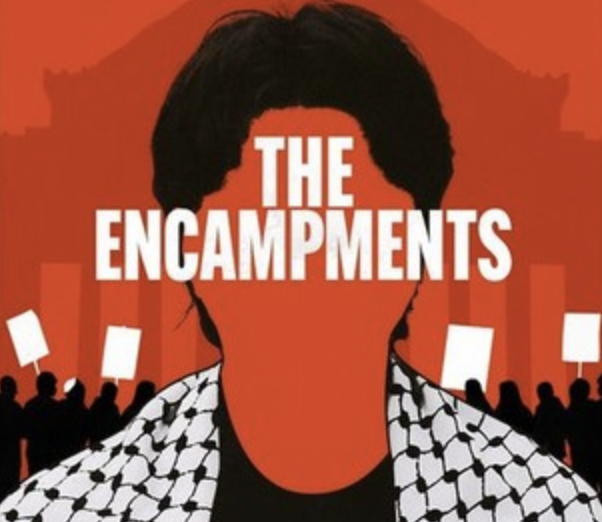
“The Encampments” is a powerful documentary that shines a light and lens on the Columbia protests, which then spread to other universities across America, to the great disdain of university officials and the Trump administration.


The film will be screening on Sunday, Sept. 7 at 4 p.m. at the Maumee Indoor Theater, brought to Toledo by the Northwest Ohio Peace Coalition.


“This documentary finds strong echoes in the protest actions and hundreds of student activists across campuses in Ohio, including Columbus, Toledo, and Bowling Green, in their demands for divestment and Palestinian self-determination and liberation, that the thousands more waking up to the reality of the genocide need to learn as quickly as possible to stop the catastrophe that is still underway in Gaza and the West Bank,” said Susan Kuehn, Co-chair of the Northwest Ohio Peace Coalition.


“The Encampments” stands as one of the most potent films about activism of the modern age, directed by journalist Kei Pritsker and filmmaker Michael T. Workman, director of the acclaimed short films “Meanwhile” and “From Parts Unknown.” The film is also executive-produced by Grammy Award-winning musician Macklemore.


“This is more than a student protest–it’s a generational struggle for justice. Students have always led the charge for justice, from the sit-ins of the Civil Rights movement to the campus protests against South African apartheid. They’ve never been on the wrong side of history. The encampments that started at Columbia are part of that legacy, inspiring millions of people around the world. The film ensures the students in U.S. and Gaza are heard, their actions are remembered, and the fight for Palestinian liberation continues,” said Macklemore in a press release about “The Encampments.”

A Q&A with Susan Kuehn about “The Encampments.”

TCP: What makes The Encampments an important film? 

Susan Kuehn: The film aims to challenge viewers’ preconceived notions about the encampments that erupted across the nation in response to Columbia University’s Gaza Solidarity Encampment, and presents a strong, unapologetically pro-Palestine viewpoint. Far from being idealistic naifs, the students lay out the factual, historical and justice-seeking rationales for their acts as they seek to make dialogue in a mediascape overloaded with stereotypes. It captures the emotion and commitment of the students and faculty involved, which may be eye-opening for those who only followed outside reports. It challenges the United States’ long-standing exception for free speech when it comes to Palestine. As a result, many faculty and students have been afraid to speak up. But for the first time on many U.S. campuses, students and faculty have defied this ban. 

And the film sets out to serve as a counter-narrative to challenge the widespread media portrayal of the Pro-Palestinian encampments themselves. It challenges all those smear campaigns media is putting out by featuring the students’ own voices and footage throughout the film emphasizing the peaceful, community-oriented nature of the encampments, showing scenes of prayer, teach-ins, and dialogue, clearly refuting the mainstream media propaganda line that characterized the protesters as violent, antisemitic, and extremist. It is a film that captures with raw intensity, the passion, resilience, and challenges of institutional repression and police raids faced by students and faculty and staff who risked everything to demand truth and justice for Palestine and university divestment from funding genocide. 

TCP: What is the overarching message behind the film? 

Susan Kuehn: The film’s overall message is that the students’ peaceful demands for divestment were a justified and morally urgent response to the genocide in Gaza, their movement was met with disproportionate and unjustified force by universities and a hostile media landscape, and that their best attempts at peaceable dialogue even now are being weaponized to shut down campus free speech.

The protestors tell us that we should not overlook the atrocities sponsored by our government in Gaza. They pressure us to care about the lives of people beyond our borders. The actions and fierce commitments to justice demonstrated by the protestors gives us back our own humanity. Images and messages in the film from Gazans giving thanks to these students and faculty protestors remind us that we can truly advocate for human solidarity, democracy, equality with justice for all.

“The Encampments” is screening on Sunday, Sept. 7 at 4 p.m. at the Maumee Indoor Theater, located at 601 Conant St.

The Toledo City Paper depends on readers like you! Become a friend today. See membership options

In April of 2024, about 50 students pitched tents on the grounds of Columbia University and created the Gaza Solidarity Encampment. The result was one of the most heated and controversial displays of student resistance and protests in decades.
“The Encampments” is a powerful documentary that shines a light and lens on the Columbia protests, which then spread to other universities across America, to the great disdain of university officials and the Trump administration.


The film will be screening on Sunday, Sept. 7 at 4 p.m. at the Maumee Indoor Theater, brought to Toledo by the Northwest Ohio Peace Coalition.


“This documentary finds strong echoes in the protest actions and hundreds of student activists across campuses in Ohio, including Columbus, Toledo, and Bowling Green, in their demands for divestment and Palestinian self-determination and liberation, that the thousands more waking up to the reality of the genocide need to learn as quickly as possible to stop the catastrophe that is still underway in Gaza and the West Bank,” said Susan Kuehn, Co-chair of the Northwest Ohio Peace Coalition.


“The Encampments” stands as one of the most potent films about activism of the modern age, directed by journalist Kei Pritsker and filmmaker Michael T. Workman, director of the acclaimed short films “Meanwhile” and “From Parts Unknown.” The film is also executive-produced by Grammy Award-winning musician Macklemore.

- Advertisement -


“This is more than a student protest–it’s a generational struggle for justice. Students have always led the charge for justice, from the sit-ins of the Civil Rights movement to the campus protests against South African apartheid. They’ve never been on the wrong side of history. The encampments that started at Columbia are part of that legacy, inspiring millions of people around the world. The film ensures the students in U.S. and Gaza are heard, their actions are remembered, and the fight for Palestinian liberation continues,” said Macklemore in a press release about “The Encampments.”

A Q&A with Susan Kuehn about “The Encampments.”

TCP: What makes The Encampments an important film? 

Susan Kuehn: The film aims to challenge viewers’ preconceived notions about the encampments that erupted across the nation in response to Columbia University’s Gaza Solidarity Encampment, and presents a strong, unapologetically pro-Palestine viewpoint. Far from being idealistic naifs, the students lay out the factual, historical and justice-seeking rationales for their acts as they seek to make dialogue in a mediascape overloaded with stereotypes. It captures the emotion and commitment of the students and faculty involved, which may be eye-opening for those who only followed outside reports. It challenges the United States’ long-standing exception for free speech when it comes to Palestine. As a result, many faculty and students have been afraid to speak up. But for the first time on many U.S. campuses, students and faculty have defied this ban. 

And the film sets out to serve as a counter-narrative to challenge the widespread media portrayal of the Pro-Palestinian encampments themselves. It challenges all those smear campaigns media is putting out by featuring the students’ own voices and footage throughout the film emphasizing the peaceful, community-oriented nature of the encampments, showing scenes of prayer, teach-ins, and dialogue, clearly refuting the mainstream media propaganda line that characterized the protesters as violent, antisemitic, and extremist. It is a film that captures with raw intensity, the passion, resilience, and challenges of institutional repression and police raids faced by students and faculty and staff who risked everything to demand truth and justice for Palestine and university divestment from funding genocide. 

TCP: What is the overarching message behind the film? 

Susan Kuehn: The film’s overall message is that the students’ peaceful demands for divestment were a justified and morally urgent response to the genocide in Gaza, their movement was met with disproportionate and unjustified force by universities and a hostile media landscape, and that their best attempts at peaceable dialogue even now are being weaponized to shut down campus free speech.

The protestors tell us that we should not overlook the atrocities sponsored by our government in Gaza. They pressure us to care about the lives of people beyond our borders. The actions and fierce commitments to justice demonstrated by the protestors gives us back our own humanity. Images and messages in the film from Gazans giving thanks to these students and faculty protestors remind us that we can truly advocate for human solidarity, democracy, equality with justice for all.

“The Encampments” is screening on Sunday, Sept. 7 at 4 p.m. at the Maumee Indoor Theater, located at 601 Conant St.

Recent Articles

Our Latest Digital Issue

Toledo City Paper
Privacy Overview

This website uses cookies so that we can provide you with the best user experience possible. Cookie information is stored in your browser and performs functions such as recognising you when you return to our website and helping our team to understand which sections of the website you find most interesting and useful.