
The Toledo City Paper depends on readers like you! Become a friend today. See membership options
It is a place that can drive you batty.
Bats that are injured receive care and support. So do snakes, songbirds, opossums, turtles, and other critters. They are temporary guests at Nature’s Nursery.
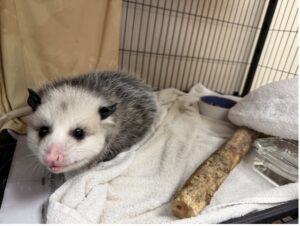
The organization’s primary mission is to rescue and rehabilitate sick and injured animals and, whenever possible, return them to the wild. Educational programs help inform the public that what happens at Nature’s Nursery has a direct impact on your own backyard and kitchen table.
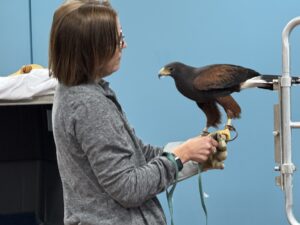
Approximately 3,000 animals are treated annually. Nature’s Nursery has grown significantly from its humble beginnings 36 years ago. It is now in its third location, a former restaurant, off Dutch Road in Lucas County. “We take native wildlife,” explained Executive Director Allison Aey. “We don’t take dogs or cats, and we don’t take domestic bunnies. We only take animals native to this area and are wild animals.” It is not possible for all animals to be released back into their natural habitats. “They have to meet a certain criteria,” Aey noted. “Our goal is always to get them back into the wild.” However, if there is a chance they might suffer, they will not be released. “We would never want to do that to an animal.” The decision-making process is thorough and includes securing permits to keep an animal kept for educational purposes. “We are permitted by the feds,” Aey says, “and the USDA. You have a lot of rules and laws that you have to adhere to.”
The operation serves 18 counties supported by a staff of 15 to 20 employees and approximately 80 volunteers. They are enthusiastic about their work. One of the volunteers has helped for more than a decade. Cleaning and maintaining animal welfare standards and medical equipment is a constant and expensive proposition. “We are privately funded by community support, donations, grants, sponsorships, and event fundraisers. It’s a challenging environment right now,” Aey said. “A lot of the national funding has been cut for larger organizations, so those organizations are coming after some of the smaller community grants. That makes it more competitive for us to get those.”
Aey provided examples of why the group’s work is important to Northwest Ohio. “Bats have declined in this area an estimated 80 to 90 per cent. The role that bats play in the ecosystem is they eat pest bugs. That’s one of their primary food sources.” Fewer bats mean more mosquitoes bothering people outside. Bats also eat other insects which feast on crops. “Being in an agricultural area, we really need to make people understand that without these bats, farmers are having to use other methods including chemicals” to control insects and save their yield.
Aey enjoys the job because it is fulfilling and offers new learning experiences every week. Last winter, Nature’s Nursery took in six skunks and two foxes after rescuing them from a fur farm. “It really is a great job!”
Nature’s Nursery is open to the public Mondays and Wednesdays. Operating hours are on the website at nature’s-nursery.org.