
Thursday, November 12, 2026

Current Lucas County Probate Court Judge Sued

The Toledo City Paper depends on readers like you! Become a friend today. See membership options

Judge Puffenberger sued by former state representative over commercial

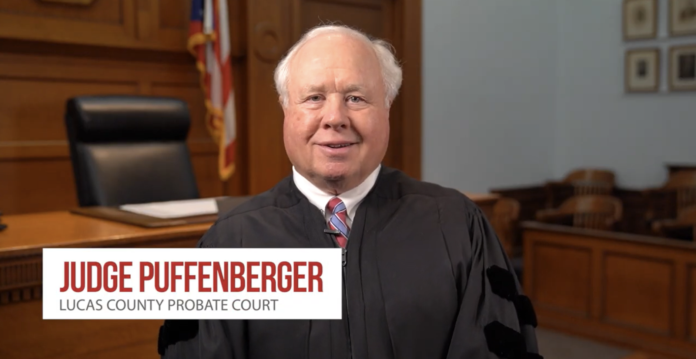
If you ever tuned into the 13abc newscasts during late 2025 and early 2026, you may have seen a commercial featuring Lucas County Probate Court Judge Jack R. Puffenberger show up on your television and discuss all that the probate court does.

While this seems strictly educational, many viewers, including former attorney and Ohio state representative David Karmol, noticed how the commercials started airing right as Puffenberger’s son, Tom Puffenberger, was running to take his father’s position as Lucas County Probate Court judge.

A deep dive

“I looked into it and found that he’s age-limited. He cannot run for re-election, but his son is running, and his son happens to have the same last name, Puffenberger… Suddenly in his final year, he decides that he needs to do a ‘public education program’ to inform the public of what the probate court does, and in the course of doing so, of course he publicizes his name more than any other thing in those ads,” Karmol said. “You really should not be spending public money to promote the name of a candidate, and when you’re splashing the name of the candidate across the screen and you’re saying ‘I’m Judge Puffenberger,’ that helps a candidate named Puffenberger.”

According to records, Puffenberger used $60,000 of taxpayer money to fund the two ads. $5,000 per ad to hire Strategy by Fischer, so $10,000, and $25,000 per ad to air it on WTVG, for a total of $50,000.

As Karmol believes these ads benefited Tom Puffenberger’s run for judge, which was successful, he sued to give the $60,000 back to Toledo’s citizens.

“I don’t benefit at all from filing this lawsuit. The money would go back to the taxpayers of Lucas County; it would be returned to the county treasurer,” Karmol said. “I would just be reimbursed for my expenses in filing the case. All I’m looking for is for Judge Puffenberger to pay back the taxpayers.”

Karmol first filed the lawsuit on Aug. 26 and Judge Puffenberger filed his answer on Oct. 9, which Karmol responded to on Oct. 22. As of Oct. 26, Karmol is waiting to hear from the judge.

“Judge Puffenberger admits everything else. He admits he ran the ads. He admits he spent the $60,000. He admits that his son [was] a candidate. Admits they were run on Channel 13 for approximately six months. The only thing he doesn’t know is whether they were a benefit to a candidate or not,” Karmol said. “I think anybody who is a student of politics in the slightest degree would know that $60,000 of advertising on the local TV station saying the name and showing it on screen in big block letters helps a candidate named Puffenberger.”

Both commercials are 30 seconds long, and in the first commercial it says the last name ‘Puffenberger’ once, has the name written in large block letters once and has the name written in small letters twice. In the second commercial, it says the name once, has it written in large block letters twice and has the name written in small letters six times. Neither commercial brings up Tom Puffenberger, apart from the shared last name.

Puffenberger’s words

Puffenberger first released the commercials as part of “Judge Puffenberger’s Public Education Program” as a way to teach the community about what the Lucas County Probate Court does.

In a proposal to B.J. Fischer, owner of Strategy by Fischer, Puffenberger wrote that this advertisement campaign was for the Public Education Program.

The proposal reads, “It is my pleasure to present this proposal to continue to provide media services for the Public Education Program.”

It also lists the cost of the advertising and how the ads are for television and digital media.

In a statement, Puffenberger wrote to Karmol after receiving the lawsuit, Puffenberger wrote, “As a judge, I am urged by the Code of Judicial Conduct to initiate and participate in activities promoting public understanding of the administration of justice. The Lucas County Probate Court’s Public Education Program is a perfect example of the fulfillment of that goal. This highly successful program has significantly increased public awareness of probate issues and has provided our citizens with valuable information regarding the probate process. I stand behind this endeavor 100% regardless of any political gamesmanship designed to discredit the program or the Court.”

When Karmol first filed the lawsuit, it was sent to Julia Bates, the Lucas County Prosecutor on July 9, who denied instituting civil action and taking the case on July 13, which Karmol expected. In order to file a taxpayer lawsuit, you have to make the request to the prosecutor first. In her statement, she wrote that “the expenditure is legitimate under Ohio law” and proceeded to go more in-depth.

“The Ohio Supreme Court has stated that ‘common pleas courts and their divisions have inherent power to order funding that is reasonable and necessary to the court’s administration of their business,’” Bates wrote. “Further, the Ohio Supreme Court has expressly held that a probate court judge may properly spend money on ‘projects that apprise the community of court-related information.’”

The law

To back up his case, Karmol points to Ohio Revised Code Section 9.03 (D) that reads, “no person shall knowingly conduct a direct or indirect transaction of public funds to the benefit of any of the following: A campaign committee; a political action committee; a legislative campaign fund; a political party; a campaign fund; a political committee; a separate segregated fund; a candidate.”

However, this same Ohio Revised Code also applies to the public education aspect of the advertisements as well, allowing public funds to run them.

Ohio Revised Code Section 9.03 (B) reads, “the governing body of a political subdivision may use public funds to publish and distribute newsletters, or to use any other means, to communicate information about the plans, policies, and operations of the political subdivision to members of the public within the political subdivision and to other persons who may be affected by the political subdivision.”

Finding help

When it came to finding a judge to take on this case, Karmol had a hard time because they all knew Puffenberger, which is a conflict of interest. When it came to finding a lawyer, Karmol found himself in a similar situation, which is why he is now representing himself.

“I actually looked for lawyers who would assist me in filing the case and actually represent me as my attorney. I couldn’t find anyone willing to do it. I understand that because he’s the probate court judge, and almost every lawyer, if they have a respectable practice, is going to run into a case where they have to be before the probate court. Anytime somebody dies, anytime they have an estate, the probate court handles a lot of the issues,” Karmol said. “I wasn’t surprised, but it caused me to have to do all this work. I had to do the case on my own during my own campaign for state representative.”

While busy campaigning, Karmol still stepped up to file the lawsuit because in his own words, “no one else was doing it.”

“I had people in the Republican Party say, ‘Don’t do it, Dave, this will just cause trouble… He’s not the first one to do it…’ Just because other people have done it doesn’t make it right,” Karmol said. “If you have a person in a position of authority, like a judge, who’s sworn to uphold the law, and he’s breaking the law. What does that say to other people? It says, ‘If you’re powerful enough and you’ve been in office long enough, you can just pay no attention to the law.’”

The Toledo City Paper depends on readers like you! Become a friend today. See membership options

Judge Puffenberger sued by former state representative over commercial

If you ever tuned into the 13abc newscasts during late 2025 and early 2026, you may have seen a commercial featuring Lucas County Probate Court Judge Jack R. Puffenberger show up on your television and discuss all that the probate court does.

While this seems strictly educational, many viewers, including former attorney and Ohio state representative David Karmol, noticed how the commercials started airing right as Puffenberger’s son, Tom Puffenberger, was running to take his father’s position as Lucas County Probate Court judge.

A deep dive

“I looked into it and found that he’s age-limited. He cannot run for re-election, but his son is running, and his son happens to have the same last name, Puffenberger… Suddenly in his final year, he decides that he needs to do a ‘public education program’ to inform the public of what the probate court does, and in the course of doing so, of course he publicizes his name more than any other thing in those ads,” Karmol said. “You really should not be spending public money to promote the name of a candidate, and when you’re splashing the name of the candidate across the screen and you’re saying ‘I’m Judge Puffenberger,’ that helps a candidate named Puffenberger.”

According to records, Puffenberger used $60,000 of taxpayer money to fund the two ads. $5,000 per ad to hire Strategy by Fischer, so $10,000, and $25,000 per ad to air it on WTVG, for a total of $50,000.

- Advertisement -

As Karmol believes these ads benefited Tom Puffenberger’s run for judge, which was successful, he sued to give the $60,000 back to Toledo’s citizens.

“I don’t benefit at all from filing this lawsuit. The money would go back to the taxpayers of Lucas County; it would be returned to the county treasurer,” Karmol said. “I would just be reimbursed for my expenses in filing the case. All I’m looking for is for Judge Puffenberger to pay back the taxpayers.”

Karmol first filed the lawsuit on Aug. 26 and Judge Puffenberger filed his answer on Oct. 9, which Karmol responded to on Oct. 22. As of Oct. 26, Karmol is waiting to hear from the judge.

“Judge Puffenberger admits everything else. He admits he ran the ads. He admits he spent the $60,000. He admits that his son [was] a candidate. Admits they were run on Channel 13 for approximately six months. The only thing he doesn’t know is whether they were a benefit to a candidate or not,” Karmol said. “I think anybody who is a student of politics in the slightest degree would know that $60,000 of advertising on the local TV station saying the name and showing it on screen in big block letters helps a candidate named Puffenberger.”

Both commercials are 30 seconds long, and in the first commercial it says the last name ‘Puffenberger’ once, has the name written in large block letters once and has the name written in small letters twice. In the second commercial, it says the name once, has it written in large block letters twice and has the name written in small letters six times. Neither commercial brings up Tom Puffenberger, apart from the shared last name.

Puffenberger’s words

Puffenberger first released the commercials as part of “Judge Puffenberger’s Public Education Program” as a way to teach the community about what the Lucas County Probate Court does.

In a proposal to B.J. Fischer, owner of Strategy by Fischer, Puffenberger wrote that this advertisement campaign was for the Public Education Program.

The proposal reads, “It is my pleasure to present this proposal to continue to provide media services for the Public Education Program.”

It also lists the cost of the advertising and how the ads are for television and digital media.

In a statement, Puffenberger wrote to Karmol after receiving the lawsuit, Puffenberger wrote, “As a judge, I am urged by the Code of Judicial Conduct to initiate and participate in activities promoting public understanding of the administration of justice. The Lucas County Probate Court’s Public Education Program is a perfect example of the fulfillment of that goal. This highly successful program has significantly increased public awareness of probate issues and has provided our citizens with valuable information regarding the probate process. I stand behind this endeavor 100% regardless of any political gamesmanship designed to discredit the program or the Court.”

When Karmol first filed the lawsuit, it was sent to Julia Bates, the Lucas County Prosecutor on July 9, who denied instituting civil action and taking the case on July 13, which Karmol expected. In order to file a taxpayer lawsuit, you have to make the request to the prosecutor first. In her statement, she wrote that “the expenditure is legitimate under Ohio law” and proceeded to go more in-depth.

“The Ohio Supreme Court has stated that ‘common pleas courts and their divisions have inherent power to order funding that is reasonable and necessary to the court’s administration of their business,’” Bates wrote. “Further, the Ohio Supreme Court has expressly held that a probate court judge may properly spend money on ‘projects that apprise the community of court-related information.’”

The law

To back up his case, Karmol points to Ohio Revised Code Section 9.03 (D) that reads, “no person shall knowingly conduct a direct or indirect transaction of public funds to the benefit of any of the following: A campaign committee; a political action committee; a legislative campaign fund; a political party; a campaign fund; a political committee; a separate segregated fund; a candidate.”

However, this same Ohio Revised Code also applies to the public education aspect of the advertisements as well, allowing public funds to run them.

Ohio Revised Code Section 9.03 (B) reads, “the governing body of a political subdivision may use public funds to publish and distribute newsletters, or to use any other means, to communicate information about the plans, policies, and operations of the political subdivision to members of the public within the political subdivision and to other persons who may be affected by the political subdivision.”

Finding help

When it came to finding a judge to take on this case, Karmol had a hard time because they all knew Puffenberger, which is a conflict of interest. When it came to finding a lawyer, Karmol found himself in a similar situation, which is why he is now representing himself.

“I actually looked for lawyers who would assist me in filing the case and actually represent me as my attorney. I couldn’t find anyone willing to do it. I understand that because he’s the probate court judge, and almost every lawyer, if they have a respectable practice, is going to run into a case where they have to be before the probate court. Anytime somebody dies, anytime they have an estate, the probate court handles a lot of the issues,” Karmol said. “I wasn’t surprised, but it caused me to have to do all this work. I had to do the case on my own during my own campaign for state representative.”

While busy campaigning, Karmol still stepped up to file the lawsuit because in his own words, “no one else was doing it.”

“I had people in the Republican Party say, ‘Don’t do it, Dave, this will just cause trouble… He’s not the first one to do it…’ Just because other people have done it doesn’t make it right,” Karmol said. “If you have a person in a position of authority, like a judge, who’s sworn to uphold the law, and he’s breaking the law. What does that say to other people? It says, ‘If you’re powerful enough and you’ve been in office long enough, you can just pay no attention to the law.’”

Recent Articles

Our Latest Digital Issue

Digital Issue: November 2026 Edition

https://issuu.com/adamsst/docs/toledo_city_paper_november_2026  
Toledo City Paper
Privacy Overview

This website uses cookies so that we can provide you with the best user experience possible. Cookie information is stored in your browser and performs functions such as recognising you when you return to our website and helping our team to understand which sections of the website you find most interesting and useful.