

Sunday, January 18, 2026

Big Idea 2026

The Toledo City Paper depends on readers like you! Become a friend today. See membership options

Toledo City Paper’s annual Big Idea Issue celebrates community leaders boldly reimagining
our area, launching fresh ideas, challenging convention and creating innovative solutions
that shape a more inclusive, vibrant future.

Dean Davis

Owner/CEO, Ant Farm

Why you should know Dean.. Because he is shaping the visual identity of Toledo at a scale few artists attempt.

He cold-called 85% of his clients, producing over 60,000 square feet of public art. He is now expanding into the River Gallery and forming partnerships with nonprofits like Keep Toledo/Lucas County Beautiful organization to make public art more accessible and sustainable. He is creating the blueprint for Toledo’s creative future—even though, as he says, “There is no playbook for decorating a city.”

Dean Davis believes Toledo is on the frontier of something great—its resilience, character and creative talent deserve to be seen on a grand scale. His mission is to “decorate the city” in a way that reflects what the community loves and who they truly are. Like other cities known for murals, he wants Toledo to stand out by transforming its walls, silos and overlooked spaces into vibrant landmarks that tell the city’s story.

He sees public art not just as beautification, but as an educational, emotional, and cultural uplift. Murals can teach people about Toledo, attract visitors to admire its museums and parks and help residents—from the unhoused to the everyday 9-to-5 worker—feel inspired during tough seasons like winter.

His mission is not solely personal success—he wants to build an infrastructure that helps future Toledo artists work full-time without leaving the city. Dean is pushing for a community where young creatives (including middle schoolers he is mentoring this winter) can contribute to real murals and see their ideas reflected in the city around them.

Eric OttoEric Otto

Director, Live Arts Toledo

You should know Eric because.. He has a vision that is bold, ambitious and transformative: build Toledo’s first fully professional ballet company—one that can stand alongside arts institutions in major cultural cities.

After four years as Artistic Director at Live Arts, he has been steadily shaping this dream into reality. His goal is to establish a company of eight full-time professional dancers, supported by a thriving ballet school, innovative programming and collaborations with Toledo’s symphony and broader arts community.

Eric believes Toledo is uniquely positioned for this growth. The city has the demographic strength, community enthusiasm and artistic infrastructure to sustain a professional ballet company. In just three years, Live Arts has already expanded to three full-time dancers, a robust academy of 225 students, and a string of productions that continue to elevate the local arts landscape. With four large ballet studios next to the Stranahan Theater, Eric is developing a space where dance training, creativity and artistic excellence can flourish.

His big idea extends beyond technique and performance. He wants to bring the artistic energy of New York—Broadway talent, renowned choreographers, expert guest teachers—and merge it with Toledo’s hunger for cultural growth. He envisions programs that span ballet, jazz, orchestral collaborations and new works that push boundaries and expand what classical ballet can be in a modern, midwestern city.

For Eric, Toledo is not a stepping stone. It is a community capable of sustaining true artistic innovation—and he is here to build it.
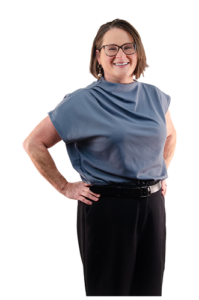
Julie Embree

Executive Director at Toledo Lucas County Homelessness Board

Why you should know Julie.. People should know Julie because she is a connector and a problem-solver. She brings people together, asks hard questions and pushes for new approaches when old systems fail. Her leadership is not about doing what’s easy—it’s about doing what’s necessary for the most vulnerable members of the community. Julie is transforming how Toledo understands, responds to, and supports people experiencing homelessness. Her mission is rooted in one belief: everyone deserves a safe place to live. While she acknowledges that homelessness can never be fully eliminated, her focus is on making the experience as brief, humane and trauma-informed as possible.

Julie challenges the myths surrounding homelessness, emphasizing that many individuals are thrust into complex systems while navigating impossible choices. For young adults, trafficking survivors, seniors and families facing homelessness for the first time, the current system is often too rigid, too complicated, and too limited. She is committed to changing that.

Her work includes improving access to information, expanding user-friendly services, and finding flexible solutions that reach people who fall through eligibility gaps—especially vulnerable groups like 18–24-year-olds at Park Apartments or seniors who can no longer stay in shelters due to higher medical needs.

With rising housing costs, an aging housing market, and out-of-state buyers driving up prices, Julie is pushing for creative tools, more affordable housing options, and practical short-term supports that prevent homelessness before it happens.

Supported by a strong team and community partners, she has helped build a culture of trust—one where service providers can speak openly about needs, challenges and necessary change. In a time when homelessness has doubled and Toledo recently suffered an unacceptable loss of life, Julie’s work centers on honesty, collaboration and a belief that Toledo’s compassion can drive real solutions.

Dennis Hopson

Founder, Hopson Elite Basketball Club

Why should people know him?

Dennis Hopson describes himself as a “person of substance,” and his life reflects that.  former professional athlete with a unique life journey, he brings lived experience, discipline and a strong sense of service into everything he does. He is committed to helping others at any cause, giving back and sharing what he’s learned. Most notably, he founded the Hopson Elite Basketball Club, a highly competitive program that: Gives young athletes a chance to play basketball at a high level, provides opportunities to travel and see the world beyond their neighborhood, connects players with mental-health professionals, helps showcase talent to college coaches and teaches life skills that go far beyond the court. For Hopson, it’s not about basketball—it’s about what basketball can do for the kids who love it.

Dennis Hopson’s vision is simple but urgently needed: create more opportunities for kids—real opportunities that support their growth, challenge them, and build their futures. He believes today’s youth don’t have enough positive outlets, structured programs or environments that encourage development beyond school. His dream is to see Toledo become a place where young people have safe spaces to learn, play and explore their potential.

Through his work, Hopson emphasizes that sports—especially basketball—can be far more than a game. When structured with purpose, athletics become a bridge to life skills, travel, mentorship, exposure and new experiences. His big idea isn’t just “keep kids busy”—it’s to equip them to grow into confident, resilient adults. Whether it’s leadership, discipline, teamwork or emotional support, he believes that every young person deserves access to tools that help them see the world differently and see themselves differently.

At the core, Hopson wants to expand what’s possible for kids in Toledo. It’s about opening doors that many children don’t even realize exist.
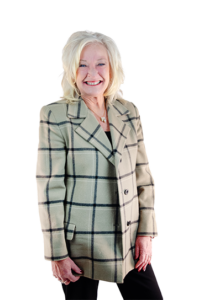
Lisa Sobecki

Lucas County Commissioner — Board President

Why you should know Lisa.. People should know Commissioner Sobecki be- cause she is a worker at heart—driven by service, not spotlight. Her public life began in 2008 as a “mom on a mission,” running for school board to protect and strengthen public education. Since then, she has remained a consistent advocate for the people she represents, always striving to offer the best answer regardless of political lines. Her leadership has never been about personal attention; it has always been about how we move our schools, our state and our county forward together.

She never planned to become a county commissioner—she was asked to serve, and she stepped forward because her community believed in her ability to lead. From school board to state representative to county commissioner, she has witnessed and contributed to the evolution of women’s leadership in local government.

Commissioner Lisa A. Sobecki is reshaping how Lucas County plans, collaborates and advocates for its future. Her big idea is the creation of the first-ever strategic plan for Lucas County—a living roadmap that brings residents, leaders and partners together with one voice.

For the past three years, she has helped unite public and private stakeholders through the Toledo Legislative Alliance, coordinating trips to Washington, D.C. to present a shared federal vision for Toledo and Lucas County.

At the core of her mission is stability and modernization: strengthening the county’s financial health, improving internal and external communication, and updating government systems that have lagged behind the pace of community innovation. Under her leadership, the county has maintained a stable bond rating, passed its operating budget early and moved forward on long overdue modernization efforts. She is preparing Lucas County for challenges ahead—including shifting administrative costs to counties. Her work is grounded in collaboration, transparency and empowerment. By engaging residents directly in shaping the new strategic plan, she is creating a county framework that reflects community voices while building a stronger, more resilient future for all.
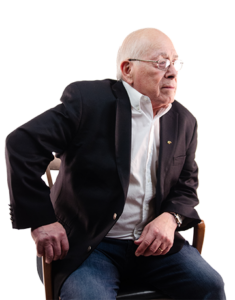
Baldemar Valasquez

Founder Farm Labor Organizing Committee — FLOC

Why you should know him.. Baldemar Velasquez is the President of FLOC, a national labor union fighting for farmworkers’ rights for decades. He believes the American people need to hear a more truthful, compassionate and practical message about immigration—one shaped by real workers, real numbers, and real human stories. His leadership connects Toledo to a national and international movement for economic justice and fair labor practices.

Baldemar Velasquez is calling for Americans to think more clearly, rationally and humanely about immigration—starting with the real causes, not just the symptoms that dominate political debates. From Toledo, he and FLOC (the Farm Labor Organizing Committee) have launched a national effort to reframe immigration as an economic and foreign-policy issue, not merely a border issue. He argues that much of the current crisis stems from unsustainable foreign policies, trade deals that have displaced millions of workers abroad and a U.S. economy heavily dependent on undocumented labor.

Velasquez highlights a critical reality: industries like hospitality, construction and especially agriculture rely on undocumented workers to survive. In agriculture alone, an estimated 40–45% of the workforce is undocumented, and these laborers are now facing wage cuts that drop their pay to $4–$5 an hour under recent Department of Labor policy changes. He calls this not only an injustice but a threat to America’s food supply. If the U.S. continues to underpay, dehumanize, and deport the very workers who keep the industry running, the country will be forced to import more food—leaving America unable to sustain itself.

For Velasquez, immigration is not a partisan issue—it is an economic necessity, a moral responsibility, and a chance for the U.S. to align its values with its actions.

Adam Levine

Director – Toledo Museum of Art

Why you should know him.. For Levine, the spotlight is secondary. What mat- ters most is recognizing the nearly 300 individuals who bring the museum to life every day—educators,
curators, designers, conservators, visitor-experience teams and many more. Their work is what makes TMA exceptional, and Levine believes that knowing them is far more important than knowing him. His role, as he sees it, is to support their talents, amplify their contributions and ensure they have the resources needed to elevate the museum for the community and the world.

Adam Levine envisions the Toledo Museum of Art as the model museum for the United States—a place where artistic excellence, community belonging and future-focused innovation intersect. His big idea centers on blending TMA’s historic commitment to world-class collections with a broader, more inclusive approach to community engagement. Under his leadership, this vision is already becoming reality: last year, USA Today named TMA the top museum in the nation, reflecting the institution’s rising prominence and the strength of its team.

Looking ahead, Levine is focused on building systems and experiences that will shape the museum’s future. A major initiative including reinstalling the museum chronologically, giving visitors a clearer sense of how the world has long been connected across cultures and geography. Levine sees this reinstallation as especially timely, offering historical perspective in a moment when people everywhere are reassessing how and why we want to be connected. Alongside this effort, he is expanding creative partnerships, investing in digital infrastructure and ensuring TMA remains a dynamic space where art, technology and learning merge. His goal is a museum that not only preserves culture, but actively participates in shaping what culture becomes.

Sonia Flunder McNair

Founder, Urban Holistics and SONIA Organics

Why you should know Sonia.. People should know her because she is growing more than food—she is growing farmers, ecosystems and futures.

In a country where only about 2% of the population are farmers—and where Black women make up a tiny fraction of that number—she embodies resilience against generations of land loss, disinvestment and systemic barriers.

Her work proves what’s possible when vision meets determination. Sonia teaches children and adults how to build city farms, craft plant-based products and turn their skills into income. Her impact is measured not only in gardens, harvests and community markets—but in the growing number of confident, skilled, community-minded youth stepping into leadership. Sonia Flunder-McNair is reimagining what food, wellness and community care can look like in Ohio.

Her big idea is to build systems that uplift urban and rural farmers while cultivating the next generation of food producers. Through youth-centered agricultural policy, she works to remove long-standing barriers and make farming a viable, respected and accessible path for young people— especially in underserved communities. At the core of her mission is a holistic approach: connecting food quality, neighborhood safety, wellness education, youth development and violence reduction into a single living system. Sonia teaches communities how to heal through nature, how to grow their own food and how to create sustainable, beautiful neighborhoods that feed both body and spirit.

The Toledo City Paper depends on readers like you! Become a friend today. See membership options

Toledo City Paper’s annual Big Idea Issue celebrates community leaders boldly reimagining
our area, launching fresh ideas, challenging convention and creating innovative solutions
that shape a more inclusive, vibrant future.

Dean Davis

Owner/CEO, Ant Farm

Why you should know Dean.. Because he is shaping the visual identity of Toledo at a scale few artists attempt.

He cold-called 85% of his clients, producing over 60,000 square feet of public art. He is now expanding into the River Gallery and forming partnerships with nonprofits like Keep Toledo/Lucas County Beautiful organization to make public art more accessible and sustainable. He is creating the blueprint for Toledo’s creative future—even though, as he says, “There is no playbook for decorating a city.”

- Advertisement -

Dean Davis believes Toledo is on the frontier of something great—its resilience, character and creative talent deserve to be seen on a grand scale. His mission is to “decorate the city” in a way that reflects what the community loves and who they truly are. Like other cities known for murals, he wants Toledo to stand out by transforming its walls, silos and overlooked spaces into vibrant landmarks that tell the city’s story.

He sees public art not just as beautification, but as an educational, emotional, and cultural uplift. Murals can teach people about Toledo, attract visitors to admire its museums and parks and help residents—from the unhoused to the everyday 9-to-5 worker—feel inspired during tough seasons like winter.

His mission is not solely personal success—he wants to build an infrastructure that helps future Toledo artists work full-time without leaving the city. Dean is pushing for a community where young creatives (including middle schoolers he is mentoring this winter) can contribute to real murals and see their ideas reflected in the city around them.

Eric OttoEric Otto

Director, Live Arts Toledo

You should know Eric because.. He has a vision that is bold, ambitious and transformative: build Toledo’s first fully professional ballet company—one that can stand alongside arts institutions in major cultural cities.

After four years as Artistic Director at Live Arts, he has been steadily shaping this dream into reality. His goal is to establish a company of eight full-time professional dancers, supported by a thriving ballet school, innovative programming and collaborations with Toledo’s symphony and broader arts community.

Eric believes Toledo is uniquely positioned for this growth. The city has the demographic strength, community enthusiasm and artistic infrastructure to sustain a professional ballet company. In just three years, Live Arts has already expanded to three full-time dancers, a robust academy of 225 students, and a string of productions that continue to elevate the local arts landscape. With four large ballet studios next to the Stranahan Theater, Eric is developing a space where dance training, creativity and artistic excellence can flourish.

His big idea extends beyond technique and performance. He wants to bring the artistic energy of New York—Broadway talent, renowned choreographers, expert guest teachers—and merge it with Toledo’s hunger for cultural growth. He envisions programs that span ballet, jazz, orchestral collaborations and new works that push boundaries and expand what classical ballet can be in a modern, midwestern city.

For Eric, Toledo is not a stepping stone. It is a community capable of sustaining true artistic innovation—and he is here to build it.

Julie Embree

Executive Director at Toledo Lucas County Homelessness Board

Why you should know Julie.. People should know Julie because she is a connector and a problem-solver. She brings people together, asks hard questions and pushes for new approaches when old systems fail. Her leadership is not about doing what’s easy—it’s about doing what’s necessary for the most vulnerable members of the community. Julie is transforming how Toledo understands, responds to, and supports people experiencing homelessness. Her mission is rooted in one belief: everyone deserves a safe place to live. While she acknowledges that homelessness can never be fully eliminated, her focus is on making the experience as brief, humane and trauma-informed as possible.

Julie challenges the myths surrounding homelessness, emphasizing that many individuals are thrust into complex systems while navigating impossible choices. For young adults, trafficking survivors, seniors and families facing homelessness for the first time, the current system is often too rigid, too complicated, and too limited. She is committed to changing that.

Her work includes improving access to information, expanding user-friendly services, and finding flexible solutions that reach people who fall through eligibility gaps—especially vulnerable groups like 18–24-year-olds at Park Apartments or seniors who can no longer stay in shelters due to higher medical needs.

With rising housing costs, an aging housing market, and out-of-state buyers driving up prices, Julie is pushing for creative tools, more affordable housing options, and practical short-term supports that prevent homelessness before it happens.

Supported by a strong team and community partners, she has helped build a culture of trust—one where service providers can speak openly about needs, challenges and necessary change. In a time when homelessness has doubled and Toledo recently suffered an unacceptable loss of life, Julie’s work centers on honesty, collaboration and a belief that Toledo’s compassion can drive real solutions.

Dennis Hopson

Founder, Hopson Elite Basketball Club

Why should people know him?

Dennis Hopson describes himself as a “person of substance,” and his life reflects that.  former professional athlete with a unique life journey, he brings lived experience, discipline and a strong sense of service into everything he does. He is committed to helping others at any cause, giving back and sharing what he’s learned. Most notably, he founded the Hopson Elite Basketball Club, a highly competitive program that: Gives young athletes a chance to play basketball at a high level, provides opportunities to travel and see the world beyond their neighborhood, connects players with mental-health professionals, helps showcase talent to college coaches and teaches life skills that go far beyond the court. For Hopson, it’s not about basketball—it’s about what basketball can do for the kids who love it.

Dennis Hopson’s vision is simple but urgently needed: create more opportunities for kids—real opportunities that support their growth, challenge them, and build their futures. He believes today’s youth don’t have enough positive outlets, structured programs or environments that encourage development beyond school. His dream is to see Toledo become a place where young people have safe spaces to learn, play and explore their potential.

Through his work, Hopson emphasizes that sports—especially basketball—can be far more than a game. When structured with purpose, athletics become a bridge to life skills, travel, mentorship, exposure and new experiences. His big idea isn’t just “keep kids busy”—it’s to equip them to grow into confident, resilient adults. Whether it’s leadership, discipline, teamwork or emotional support, he believes that every young person deserves access to tools that help them see the world differently and see themselves differently.

At the core, Hopson wants to expand what’s possible for kids in Toledo. It’s about opening doors that many children don’t even realize exist.

Lisa Sobecki

Lucas County Commissioner — Board President

Why you should know Lisa.. People should know Commissioner Sobecki be- cause she is a worker at heart—driven by service, not spotlight. Her public life began in 2008 as a “mom on a mission,” running for school board to protect and strengthen public education. Since then, she has remained a consistent advocate for the people she represents, always striving to offer the best answer regardless of political lines. Her leadership has never been about personal attention; it has always been about how we move our schools, our state and our county forward together.

She never planned to become a county commissioner—she was asked to serve, and she stepped forward because her community believed in her ability to lead. From school board to state representative to county commissioner, she has witnessed and contributed to the evolution of women’s leadership in local government.

Commissioner Lisa A. Sobecki is reshaping how Lucas County plans, collaborates and advocates for its future. Her big idea is the creation of the first-ever strategic plan for Lucas County—a living roadmap that brings residents, leaders and partners together with one voice.

For the past three years, she has helped unite public and private stakeholders through the Toledo Legislative Alliance, coordinating trips to Washington, D.C. to present a shared federal vision for Toledo and Lucas County.

At the core of her mission is stability and modernization: strengthening the county’s financial health, improving internal and external communication, and updating government systems that have lagged behind the pace of community innovation. Under her leadership, the county has maintained a stable bond rating, passed its operating budget early and moved forward on long overdue modernization efforts. She is preparing Lucas County for challenges ahead—including shifting administrative costs to counties. Her work is grounded in collaboration, transparency and empowerment. By engaging residents directly in shaping the new strategic plan, she is creating a county framework that reflects community voices while building a stronger, more resilient future for all.

Baldemar Valasquez

Founder Farm Labor Organizing Committee — FLOC

Why you should know him.. Baldemar Velasquez is the President of FLOC, a national labor union fighting for farmworkers’ rights for decades. He believes the American people need to hear a more truthful, compassionate and practical message about immigration—one shaped by real workers, real numbers, and real human stories. His leadership connects Toledo to a national and international movement for economic justice and fair labor practices.

Baldemar Velasquez is calling for Americans to think more clearly, rationally and humanely about immigration—starting with the real causes, not just the symptoms that dominate political debates. From Toledo, he and FLOC (the Farm Labor Organizing Committee) have launched a national effort to reframe immigration as an economic and foreign-policy issue, not merely a border issue. He argues that much of the current crisis stems from unsustainable foreign policies, trade deals that have displaced millions of workers abroad and a U.S. economy heavily dependent on undocumented labor.

Velasquez highlights a critical reality: industries like hospitality, construction and especially agriculture rely on undocumented workers to survive. In agriculture alone, an estimated 40–45% of the workforce is undocumented, and these laborers are now facing wage cuts that drop their pay to $4–$5 an hour under recent Department of Labor policy changes. He calls this not only an injustice but a threat to America’s food supply. If the U.S. continues to underpay, dehumanize, and deport the very workers who keep the industry running, the country will be forced to import more food—leaving America unable to sustain itself.

For Velasquez, immigration is not a partisan issue—it is an economic necessity, a moral responsibility, and a chance for the U.S. to align its values with its actions.

Adam Levine

Director – Toledo Museum of Art

Why you should know him.. For Levine, the spotlight is secondary. What mat- ters most is recognizing the nearly 300 individuals who bring the museum to life every day—educators,
curators, designers, conservators, visitor-experience teams and many more. Their work is what makes TMA exceptional, and Levine believes that knowing them is far more important than knowing him. His role, as he sees it, is to support their talents, amplify their contributions and ensure they have the resources needed to elevate the museum for the community and the world.

Adam Levine envisions the Toledo Museum of Art as the model museum for the United States—a place where artistic excellence, community belonging and future-focused innovation intersect. His big idea centers on blending TMA’s historic commitment to world-class collections with a broader, more inclusive approach to community engagement. Under his leadership, this vision is already becoming reality: last year, USA Today named TMA the top museum in the nation, reflecting the institution’s rising prominence and the strength of its team.

Looking ahead, Levine is focused on building systems and experiences that will shape the museum’s future. A major initiative including reinstalling the museum chronologically, giving visitors a clearer sense of how the world has long been connected across cultures and geography. Levine sees this reinstallation as especially timely, offering historical perspective in a moment when people everywhere are reassessing how and why we want to be connected. Alongside this effort, he is expanding creative partnerships, investing in digital infrastructure and ensuring TMA remains a dynamic space where art, technology and learning merge. His goal is a museum that not only preserves culture, but actively participates in shaping what culture becomes.

Sonia Flunder McNair

Founder, Urban Holistics and SONIA Organics

Why you should know Sonia.. People should know her because she is growing more than food—she is growing farmers, ecosystems and futures.

In a country where only about 2% of the population are farmers—and where Black women make up a tiny fraction of that number—she embodies resilience against generations of land loss, disinvestment and systemic barriers.

Her work proves what’s possible when vision meets determination. Sonia teaches children and adults how to build city farms, craft plant-based products and turn their skills into income. Her impact is measured not only in gardens, harvests and community markets—but in the growing number of confident, skilled, community-minded youth stepping into leadership. Sonia Flunder-McNair is reimagining what food, wellness and community care can look like in Ohio.

Her big idea is to build systems that uplift urban and rural farmers while cultivating the next generation of food producers. Through youth-centered agricultural policy, she works to remove long-standing barriers and make farming a viable, respected and accessible path for young people— especially in underserved communities. At the core of her mission is a holistic approach: connecting food quality, neighborhood safety, wellness education, youth development and violence reduction into a single living system. Sonia teaches communities how to heal through nature, how to grow their own food and how to create sustainable, beautiful neighborhoods that feed both body and spirit.

Recent Articles

Our Latest Digital Issue

Toledo City Paper
Privacy Overview

This website uses cookies so that we can provide you with the best user experience possible. Cookie information is stored in your browser and performs functions such as recognising you when you return to our website and helping our team to understand which sections of the website you find most interesting and useful.