
Monday, November 9, 2026

Moving ‘UPSTREAM’ and Breaking Barriers

The Toledo City Paper depends on readers like you! Become a friend today. See membership options

Mom’s House of Toledo and Harbor announce new partnership
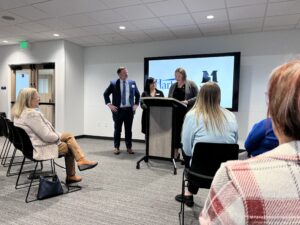
(From left to right) Dustin Watkins, Christina Rodriguez and Julie Haas come together to answer questions regarding UPSTREAM at the press conference.

Mom’s House of Toledo, a nonprofit childcare provider that supports the educational efforts of low-income, single mothers and their children, held a joint press conference on Nov. 6 with Harbor, a mental health and substance use disorder (SUD) treatment provider, to announce their new UPSTREAM program partnership.

UPSTREAM is a program to support mothers dealing with SUD and their children, to provide them each a chance towards a better future.

Why move UPSTREAM

“Imagine there’s a mother who desperately wants recovery, but must first ask, ‘what happens to my child…’ When the support isn’t available, mothers may delay treatment that could help stabilize their lives and their future for them and their child. No mother should have to choose between getting healthy and knowing her child is safe and supported,” said Christina Rodriguez, executive director of Mom’s House. “So, we began imagining something different at Mom’s House. What if we could reach mothers earlier? Help them stabilize and walk alongside them as they pursue recovery, education and financial independence. What if, throughout that journey, their children were receiving the early childhood education they need to build a strong foundation for their own future?”

Launching as a pilot program, with five spots for mothers and children, UPSTREAM helps move Mom’s House efforts ‘upstream,’ allowing the nonprofit to help mothers and their children earlier than they have in their 33 years of being open.
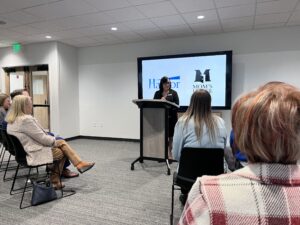
Christina Rodriguez, the executive director of Mom’s House, speaks during the press conference about how the program came to be.

“The first five years of a life are among the most critical years of human development. During these years, the foundation for learning, relationships and emotional well-being is being built,” Rodriguez said. “Children experiencing addiction, instability and trauma are at an increased risk for what we call ACEs, adverse childhood experiences. Without early intervention and protective relationships, those experiences can have long-lasting consequences for that child, that family and ultimately our community.”

In order to help the increasingly complex problems single mothers are facing in the community, Mom’s House partnered with Harbor to help provide expert-level treatment to mothers.

“We’re not changing our mission. We’re reaching families earlier,” Rodriguez said. “We’re providing more opportunities to build and to grow, and to ensure that they can have a stable home and a stable life, like we all want in our families. Most importantly, we’re breaking cycles: cycles of poverty, of trauma, of addiction.”

How does UPSTREAM work

At Harbor, mothers are able to receive SUD treatment while keeping their children, up to age five, with them. After they get out of treatment and move on, that’s where organizations like Mom’s House are able to help them excel after recovery.
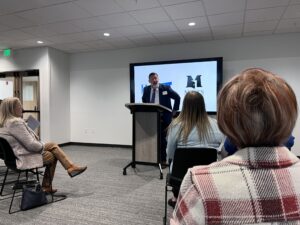
Dustin Watkins, the CEO of Harbor, speaks during the press conference about how the mission of Harbor aligns with that of Mom’s House.

“[Harbor’s] role starts with helping to create a strong foundation for recovery… We know treatment by itself is not enough. Recovery isn’t the finish… That’s where Mom’s House and this partnership become so vital,” said Dustin Watkins, CEO of Harbor. “Together, we can better connect recovery and mental wellness with education, employment, parenting, personal development and the longer-term supports that help families succeed. Additionally, her kids benefit, too. At Mom’s house, they’ll be getting a high-quality early education, one that helps them get ready for kindergarten. So while a mother is building her future, her children are building theirs”

While Harbor focuses on the mom and Mom’s House focuses on the child, the two go hand-in-hand, allowing the family to go through this experience together.

“Each day, a Harbor team member will transport these participating mothers and their children to and from Mom’s House. This is more than transportation; this is eliminating yet another barrier. This ensures access to high-quality, gold medal-rated, early care and education,” said Julie Haas, program director of Mom’s House. “Mothers present at drop-off and pickup provide an opportunity to see their child’s classroom, to build a relationship with the teacher, to ask questions and, most importantly, feel a part of that child’s learning and development.”

Throughout the pilot, members of both organizations will work with each mother to help develop a personalized plan for her and her child’s life after recovery.

“[This includes] continued education, financial stability, employment and the ongoing support services that she needs. Together, we are creating a more connected transition from residential treatment into the next chapter of life,” Haas said.

The start of a new beginning

Harbor and Mom’s House were discussing this partnership for six months before the pilot started. Even though it hasn’t be in effect for long, Haas said she can already begin to see “results.”
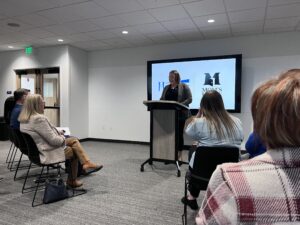
Julie Haas, the program director of Mom’s House, speaks during the press conference about how UPSTREAM is going to work.

“This child was thirsty for social interaction, and he comes in every day. He is hesitant to leave his mom at first, but that is not uncommon at all, between zero and five. But once he gets into his classroom and he sees his friends and his teachers, and he gets into the routine and structure of the day, he has amazing days,” Haas said. “To us, it’s working; it’s doing what it needs to do. At the end of the day, small is good, and so if it’s working for one kid, we know the probability that it’s going to work for five, or 35. We’re on the right track.”

From the mother’s perspective, having a safe environment for her son is what gives her the strength to keep going.

“[The mother] said, ‘At first I was a little bit nervous, but, to be honest with you,  I feel like he’s in a safe environment, and that’s what’s most important to me. It’s just helping me to not give up,’” said Rodriguez when quoting a participant.

In order to continue growing UPSTREAM and to fund it, the team is looking towards the community.

“We are exploring different methods of building relationships with donors, with our supporters, and also with foundations. Monetary donations right now would be wonderful… but also spread the word and tell people about this program and pray for us and our community,” Rodriguez said. “What we’re doing right now… is starting small, but it’s going to have a huge ripple effect in our community in the future.”

With a small number of programs like UPSTREAM, the team hopes to become a model and to spread programs such as this one across the country.

“We’re hoping that this will be a wonderful pilot for everybody to realize the power of these types of services and relationships, and they will echo these programs. That would be very positive,” Watkins said.

For more information on Mom’s House, go to momshousetoledo.org.

For more information on Harbor, go to harbor.org.


The Toledo City Paper depends on readers like you! Become a friend today. See membership options

Mom’s House of Toledo and Harbor announce new partnership

(From left to right) Dustin Watkins, Christina Rodriguez and Julie Haas come together to answer questions regarding UPSTREAM at the press conference.

Mom’s House of Toledo, a nonprofit childcare provider that supports the educational efforts of low-income, single mothers and their children, held a joint press conference on Nov. 6 with Harbor, a mental health and substance use disorder (SUD) treatment provider, to announce their new UPSTREAM program partnership.

UPSTREAM is a program to support mothers dealing with SUD and their children, to provide them each a chance towards a better future.

Why move UPSTREAM

“Imagine there’s a mother who desperately wants recovery, but must first ask, ‘what happens to my child…’ When the support isn’t available, mothers may delay treatment that could help stabilize their lives and their future for them and their child. No mother should have to choose between getting healthy and knowing her child is safe and supported,” said Christina Rodriguez, executive director of Mom’s House. “So, we began imagining something different at Mom’s House. What if we could reach mothers earlier? Help them stabilize and walk alongside them as they pursue recovery, education and financial independence. What if, throughout that journey, their children were receiving the early childhood education they need to build a strong foundation for their own future?”

Launching as a pilot program, with five spots for mothers and children, UPSTREAM helps move Mom’s House efforts ‘upstream,’ allowing the nonprofit to help mothers and their children earlier than they have in their 33 years of being open.

- Advertisement -
Christina Rodriguez, the executive director of Mom’s House, speaks during the press conference about how the program came to be.

“The first five years of a life are among the most critical years of human development. During these years, the foundation for learning, relationships and emotional well-being is being built,” Rodriguez said. “Children experiencing addiction, instability and trauma are at an increased risk for what we call ACEs, adverse childhood experiences. Without early intervention and protective relationships, those experiences can have long-lasting consequences for that child, that family and ultimately our community.”

In order to help the increasingly complex problems single mothers are facing in the community, Mom’s House partnered with Harbor to help provide expert-level treatment to mothers.

“We’re not changing our mission. We’re reaching families earlier,” Rodriguez said. “We’re providing more opportunities to build and to grow, and to ensure that they can have a stable home and a stable life, like we all want in our families. Most importantly, we’re breaking cycles: cycles of poverty, of trauma, of addiction.”

How does UPSTREAM work

At Harbor, mothers are able to receive SUD treatment while keeping their children, up to age five, with them. After they get out of treatment and move on, that’s where organizations like Mom’s House are able to help them excel after recovery.

Dustin Watkins, the CEO of Harbor, speaks during the press conference about how the mission of Harbor aligns with that of Mom’s House.

“[Harbor’s] role starts with helping to create a strong foundation for recovery… We know treatment by itself is not enough. Recovery isn’t the finish… That’s where Mom’s House and this partnership become so vital,” said Dustin Watkins, CEO of Harbor. “Together, we can better connect recovery and mental wellness with education, employment, parenting, personal development and the longer-term supports that help families succeed. Additionally, her kids benefit, too. At Mom’s house, they’ll be getting a high-quality early education, one that helps them get ready for kindergarten. So while a mother is building her future, her children are building theirs”

While Harbor focuses on the mom and Mom’s House focuses on the child, the two go hand-in-hand, allowing the family to go through this experience together.

“Each day, a Harbor team member will transport these participating mothers and their children to and from Mom’s House. This is more than transportation; this is eliminating yet another barrier. This ensures access to high-quality, gold medal-rated, early care and education,” said Julie Haas, program director of Mom’s House. “Mothers present at drop-off and pickup provide an opportunity to see their child’s classroom, to build a relationship with the teacher, to ask questions and, most importantly, feel a part of that child’s learning and development.”

Throughout the pilot, members of both organizations will work with each mother to help develop a personalized plan for her and her child’s life after recovery.

“[This includes] continued education, financial stability, employment and the ongoing support services that she needs. Together, we are creating a more connected transition from residential treatment into the next chapter of life,” Haas said.

The start of a new beginning

Harbor and Mom’s House were discussing this partnership for six months before the pilot started. Even though it hasn’t be in effect for long, Haas said she can already begin to see “results.”

Julie Haas, the program director of Mom’s House, speaks during the press conference about how UPSTREAM is going to work.

“This child was thirsty for social interaction, and he comes in every day. He is hesitant to leave his mom at first, but that is not uncommon at all, between zero and five. But once he gets into his classroom and he sees his friends and his teachers, and he gets into the routine and structure of the day, he has amazing days,” Haas said. “To us, it’s working; it’s doing what it needs to do. At the end of the day, small is good, and so if it’s working for one kid, we know the probability that it’s going to work for five, or 35. We’re on the right track.”

From the mother’s perspective, having a safe environment for her son is what gives her the strength to keep going.

“[The mother] said, ‘At first I was a little bit nervous, but, to be honest with you,  I feel like he’s in a safe environment, and that’s what’s most important to me. It’s just helping me to not give up,’” said Rodriguez when quoting a participant.

In order to continue growing UPSTREAM and to fund it, the team is looking towards the community.

“We are exploring different methods of building relationships with donors, with our supporters, and also with foundations. Monetary donations right now would be wonderful… but also spread the word and tell people about this program and pray for us and our community,” Rodriguez said. “What we’re doing right now… is starting small, but it’s going to have a huge ripple effect in our community in the future.”

With a small number of programs like UPSTREAM, the team hopes to become a model and to spread programs such as this one across the country.

“We’re hoping that this will be a wonderful pilot for everybody to realize the power of these types of services and relationships, and they will echo these programs. That would be very positive,” Watkins said.

For more information on Mom’s House, go to momshousetoledo.org.

For more information on Harbor, go to harbor.org.


Recent Articles

Our Latest Digital Issue

Digital Issue: November 2026 Edition

https://issuu.com/adamsst/docs/toledo_city_paper_november_2026  
Toledo City Paper
Privacy Overview

This website uses cookies so that we can provide you with the best user experience possible. Cookie information is stored in your browser and performs functions such as recognising you when you return to our website and helping our team to understand which sections of the website you find most interesting and useful.