
Monday, March 23, 2026

Lake Erie Has Had Algae Problems For Years. Is Banning Factory Farming The Answer?

The Toledo City Paper depends on readers like you! Become a friend today. See membership options

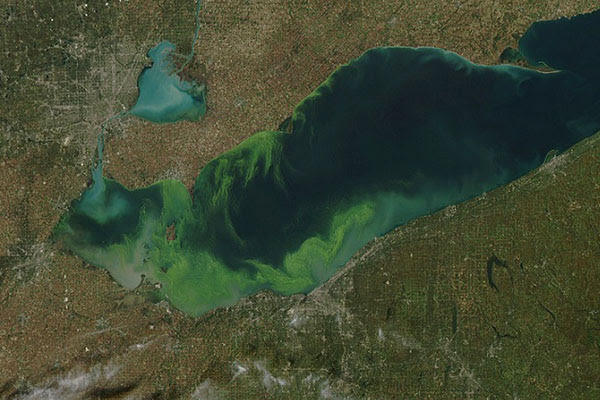
Lake Erie has had to deal with a lot of environmental damage over the years. The 2014 algae bloom that caused a don’t-drink-warning cost taxpayers $65 million. This environmental catastrophe has been an off-and-on-problem ever since.

One group has had enough. Lake Erie Advocates are calling for factory farms to be totally banned.

“Big AG came up with factory farming to drive up profits and drive out small farmers,” Mike Ferner, the LEA’s coordinator, told the Toledo City Paper.

Why the LEA is calling out factory farms

Factory farming is the least humane form of livestock breeding that there is; thousands of animals forced into lightless conditions, packed in like fury sardines, rarely if ever getting outside. Investors love this because their product rapidly gains weight. The downside is the unnatural concentration of livestock results in a larger deposit of droppings and its usually liquid, not solid.

Ferner says this method is nothing like the free-range farming he grew up with, and it doesn’t even help the farmers, only investors. In addition to helping the animals and Lake Erie, Ferner says it’ll help rural communities to return to traditional methods. Ryan Matthews, Communications Director at the Ohio Farm Bureau, rejects this.

“Clearly the mission of Lake Erie Advocates’ campaign is more about banning livestock operations than it is about getting actual results that improve the water quality of Lake Erie,” Matthews says.

Pushback from farming advocates

Not all environmentalists are on board with the LEA’s approach. Angela Blatt, the Senior Agriculture Policy Manager at the Alliance for the Great Lakes, says that blaming factory farms for Lake Erie’s problems and trying to solve them with an outright ban “oversimplifies a complex issue” and that having a respectful dialogue between farmers and the rest of the region is important.

“Nutrient pollution in Lake Erie is primarily driven by nonpoint source runoff from agricultural land. Large livestock operations … are part of that landscape and generate significant volumes of manure that must be carefully managed. When that manure is over applied or applied under high-risk conditions, it contributes to nutrient runoff. But agriculture is not monolithic. There are farms of many sizes and management styles across the basin. The issue is not the existence of agriculture; it’s whether nutrient management systems are strong enough, consistent enough, and accountable enough to prevent pollution. The conversation should focus on how to improve oversight, monitoring, and conservation outcomes, not on eliminating agriculture,” Blatt says. “Runoff can be reduced through a combination of improved nutrient management planning – crops and crop rotations, reduced tillage, grassed waterways and edge-of-field practices, constructed wetlands and drainage water management, etc. The challenge isn’t that we don’t know what works, it’s scale, targeting and consistency. Conservation funding often spreads resources thinly rather than focusing on the highest-contributing fields and sub-watersheds. If we better align funding, technical assistance, monitoring, and accountability, especially in priority watersheds like the Maumee, we can see measurable reductions.”

When asked if there is room to negotiate or reform the factory farm industry, Ferner said “No. There’s no fixing that industry.”

The Toledo City Paper depends on readers like you! Become a friend today. See membership options

Lake Erie has had to deal with a lot of environmental damage over the years. The 2014 algae bloom that caused a don’t-drink-warning cost taxpayers $65 million. This environmental catastrophe has been an off-and-on-problem ever since.

One group has had enough. Lake Erie Advocates are calling for factory farms to be totally banned.

“Big AG came up with factory farming to drive up profits and drive out small farmers,” Mike Ferner, the LEA’s coordinator, told the Toledo City Paper.

Why the LEA is calling out factory farms

Factory farming is the least humane form of livestock breeding that there is; thousands of animals forced into lightless conditions, packed in like fury sardines, rarely if ever getting outside. Investors love this because their product rapidly gains weight. The downside is the unnatural concentration of livestock results in a larger deposit of droppings and its usually liquid, not solid.

- Advertisement -

Ferner says this method is nothing like the free-range farming he grew up with, and it doesn’t even help the farmers, only investors. In addition to helping the animals and Lake Erie, Ferner says it’ll help rural communities to return to traditional methods. Ryan Matthews, Communications Director at the Ohio Farm Bureau, rejects this.

“Clearly the mission of Lake Erie Advocates’ campaign is more about banning livestock operations than it is about getting actual results that improve the water quality of Lake Erie,” Matthews says.

Pushback from farming advocates

Not all environmentalists are on board with the LEA’s approach. Angela Blatt, the Senior Agriculture Policy Manager at the Alliance for the Great Lakes, says that blaming factory farms for Lake Erie’s problems and trying to solve them with an outright ban “oversimplifies a complex issue” and that having a respectful dialogue between farmers and the rest of the region is important.

“Nutrient pollution in Lake Erie is primarily driven by nonpoint source runoff from agricultural land. Large livestock operations … are part of that landscape and generate significant volumes of manure that must be carefully managed. When that manure is over applied or applied under high-risk conditions, it contributes to nutrient runoff. But agriculture is not monolithic. There are farms of many sizes and management styles across the basin. The issue is not the existence of agriculture; it’s whether nutrient management systems are strong enough, consistent enough, and accountable enough to prevent pollution. The conversation should focus on how to improve oversight, monitoring, and conservation outcomes, not on eliminating agriculture,” Blatt says. “Runoff can be reduced through a combination of improved nutrient management planning – crops and crop rotations, reduced tillage, grassed waterways and edge-of-field practices, constructed wetlands and drainage water management, etc. The challenge isn’t that we don’t know what works, it’s scale, targeting and consistency. Conservation funding often spreads resources thinly rather than focusing on the highest-contributing fields and sub-watersheds. If we better align funding, technical assistance, monitoring, and accountability, especially in priority watersheds like the Maumee, we can see measurable reductions.”

When asked if there is room to negotiate or reform the factory farm industry, Ferner said “No. There’s no fixing that industry.”

Recent Articles

Our Latest Digital Issue

Toledo City Paper
Privacy Overview

This website uses cookies so that we can provide you with the best user experience possible. Cookie information is stored in your browser and performs functions such as recognising you when you return to our website and helping our team to understand which sections of the website you find most interesting and useful.