
The Toledo City Paper depends on readers like you! Become a friend today. See membership options
Toledo today is a very different place than in the 1950s, or the 1920s, but not everything changes over time. A different landscape and landmarks will change, but the spirit, creativity and talent can remain strong over time.
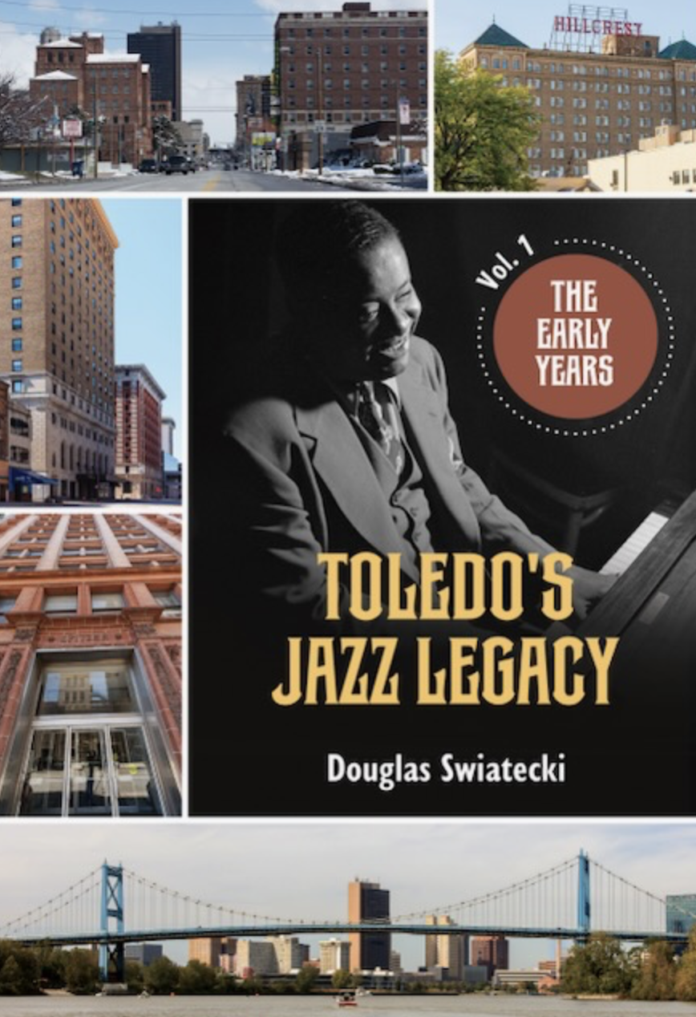
According to local author Doug Swiatecki, jazz is Toledo’s long-standing claim to fame. “We have the infrastructure for jazz, but have never marketed ourselves that well,” he explained. His two volumes on the history of jazz in Toledo – “Toledo’s Jazz Legacy, Parts 1 and 2” – will reinforce the history of our deep jazz roots and today’s promise.
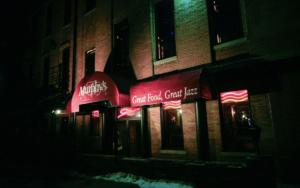 Swiatecki has spent his life following Toledo jazz. He was introduced by his parents to the music and got a local introduction on his own. “As a teen, I’d go to Rusty’s (Jazz Café) and Murphy’s Place and they’d let me in,” he said. “I got to meet and get to know Cliff Murphy and Claude Black, as well as Jon Hendricks” in these clubs, he explained.
Toledo’s jazz legacy is based on two distinct advantages: the number of legendary artists native to the Toledo area, and the range and variety of spaces to enjoy jazz performances. “Toledo jazz is so deep, with such a history,” Swiatecki explained.
Building a legacy
Toledo was booming through a good part of the 20th century, boasting a city population of more than 300,000 in 1950. There were many contributors to this growth, including the Great Migration in the early 1900s, the return of soldiers after World War II, the growth of manufacturing in the Midwest and even organized crime. Toledo’s jazz community became well established at this time, a result of its wealth of local talent and a wide range of venues for great music.
Cliff Murphy, Claude Black, Jon Hendricks and Art Tatum were among many Toledoans who established the region’s legacy in jazz talent. “Tatum didn’t go to New York City to learn jazz,” Swiatecki said. “He developed his style in Toledo and then took it to the world.”
Another reason for the success of jazz in this region is the plethora of places to play. “In the 1950s, there were well over 200 gigs going at any time in this area,” Swiatecki said. Jazz was featured in restaurants, bars, hotels and even bowling alleys. “One downtown spot had a 1,000-capacity club with a restaurant for 200,” he said.
Revealing the history
Two events pushed Swiatecki to writing about the history of jazz in Toledo: the 2013 death of his friend Claude Black and his interest in locating a photo of Art Tatum performing in a local club. He decided at the time that “someone needs to record these things,” and that he would be the one. He has since compiled at least 1,000 obituaries of local leaders in Toledo’s jazz industry (artists, club owners and others). And for the upcoming history books, he interviewed 25 jazz musicians and “took a seven-year journey to put the books together.”
He sourced a great deal of information from area libraries and clubs and gained access to a treasure-trove of private Art Tatum materials (including many items never seen before).
A feature of Toledo’s jazz history is the legendary Cake Walkin’ Jass Band, one of the nation’s longest-running traditional jazz bands. The band’s Ray Heitger is an original member of the band, and the nation’s longest-performing original member. They’ve been playing for more than 60 years, including a 33-year run at Tony Packo’s. They’ve also spent a good deal of time at Murphy’s Place, a nationally known, downtown jazz club that featured premier performers and open jams for young artists.
Local and national performances could be found all around the region, from the Tenderloin District (downtown on Lafayette near where Fifth Third Field is today) to Rusty’s Jazz Café (opened in 1963 on Tedrow Road and considered the third oldest jazz club in America) to the Dorr Street Jazz hub (a range of clubs and restaurants offering live jazz), among many offerings.
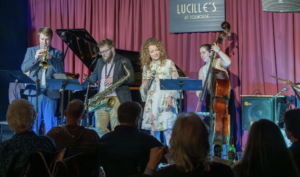
With the loss, over the years, of legendary performers and locations, and changes to the city itself, some thought jazz in Toledo had died. But it didn’t. Today’s artists (such as April Varner and Nicole Heitger) and venues are reinforcing the city’s standing as a national jazz hub.
Lucille’s Jazz Lounge has become a central location for local and national jazz performances, along with paying homage to the jazz legends of the past. In addition, Live Arts Toledo has strengthened its jazz structure through the Toledo Jazz Orchestra and youth orchestras.
And jazz is all over town. Try the Second Sunday Jazz Jam or Monday Night Jazz at Golden Road, both on Dorr Street. Rockwell’s and the Chop House have solo piano, or head to Sylvania’s Sodbusters or the Village Idiot in Maumee. In the downtown region you can also try Brew House or Poco Loco. And don’t forget Jazz in the Garden at Toledo Botanical Garden, weekly through the summer. This is a small sampling; check out the Toledo Jazz Newsletter, which Swiatecki edits, for all the shows.
“Toledo’s Jazz Legacy: Ther Early Years Vol. 1” and “Toledo’s Jazz Legacy: The Later Years Vol. 2” will be released this summer and will be for sale (in hardcover and eBook editions) through major online retailers (Amazon, Barnes & Noble, Apple, etc.). As publication nears, contact Toledo Jazz and Toledo’s Jazz Legacy for information.

