
The Toledo City Paper depends on readers like you! Become a friend today. See membership options
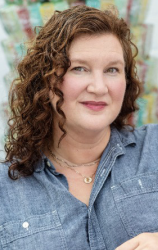
Amanda Uhle has hit the road with her memoir “Destroy This House.” Taking the AmTrack from Boston to Brooklyn while doing this interview, she had just appeared on Maureen Callahan’s new podcast “The Nerve.” Callahan’s no-nonsense, brutally honest style means she’s the kind of host her fans trust to be discerning about the books she suggests. It’s street cred well deserved for this author’s unbelievably enthralling and entertaining first book.
A Writing Start
A journalist by trade, Uhle started working with a non-profit youth writing center, A26 Michigan, about twenty years ago and has been involved with the organization nationwide, helping to make writing a core part of young people’s lives. Seven years ago she became the publisher of McSweeny’s, a publisher of magazines and books. Says Uhle, “I’ve had this affinity and have been an advocate for writers and the written word in all aspects of my career.” In the last few years she started publishing her own opinion pieces in publications like Newsweek and The Boston Globe. “I’ve been interested in personal writing my whole life. Whenever I’ve done writing it’s always been personal writing, essays and first-person narrative. I love fiction but I’m not a fiction writer.”
Growing up in Michigan
Uhle’s book is about growing up in Michigan with a father described as a charismatic wheeler-dealer, and a mother striving to be a fashion designer. While there was fierce love, their lifestyle was at best unconventional and at worst bizarre. The family see-sawed between states of wealth and poverty. The memoir covers forty years, ten homes and apartments.
Along the way, her mother developed a penchant for collecting “stuff.” Lots of it. Growing up in the 1980s and 90s, there wasn’t a word for what we would now call hoarding. “We thought of our home as messy,” says Uhle, “but that was where it ended back then.” It was a source of embarrassment, particularly in her teenage years, though Uhle says she knew something about the “clutter” wasn’t right.
By 2005 Uhle’s mom was sometimes hording perishable food. it was becoming clear that she would not or could not see what her daughter was seeing and that she had an emotional attachment to the clutter. The state of their home meant they didn’t have guests
and, for a child, that meant not only no friends over, but the fear and shame of the possibility of anyone ever seeing how they lived.
A Bond of Love
Though on its surface, the Uhle’s story sounds harrowing, there was still a bond of love and when asked why she chose to tell such a personal story, one that clearly, in some ways, was a source of embarrassment, Uhle says, “I finally got comfortable with it. I think there was shame and uneasiness about how our household worked. While there’s a dark undercurrent, they were also very loving, funny people so there was a lot of joy and mirth, but they also got us in financial trouble and we’d have to move.
As an adult, getting a different perspective on that, it felt important to retell the story. As a daughter and a journalist, I could finally be a little more matter of fact and objective.” Uhle says one of the positives of the book is that it’s a nostalgic portrait of a complicated late-century family, before the internet, social media and the crazy time we know as 2025. The affection for the 1990s is evident in the cover art of her book which recreates the alterna-
tive rock aesthetic that graced many a CD cover. She even has a Spotify playlist for the book.
Thursday, October 9, 7-8:30pm at Lourdes University in Sylvania. Get tickets online at starlitetheatergroup.org

