
Tuesday, October 13, 2026

Toledo Opera Returns to Verdi’s Aida, October 16 & 18 at the Valentine Theater

The Toledo City Paper depends on readers like you! Become a friend today. See membership options

This October Toledo Opera welcomes Aida back to the stage. It’s been ten years since the opera has been performed, and it is the opera that launched the company in 1959. Guiseppi Verdi’s epic masterpiece with themes of love, loss, and sacrifice has one of the most recognizable names in and outside of the opera world. In 2000 a reimagining of the story was created as a Broadway show written by Elton John and Tim Rice, starring Adam Pascal (Rent) and introduced Aida to a millennium audience. 

The titular Aida is an Ethiopian princess captured and enslaved in Egypt. She is secretly in love with Radames, an Egyptian military commander, leading his army against her country. Because no opera would be complete without a live triangle, the daughter of the Egyptian king Ameris is also in love with Radames. Part of the opera’s enduring appeal is its ability to include large chorus and ensemble pieces while retaining a very intimate love story at its center.

Soprano Mary Elizabeth Williams on Aida 

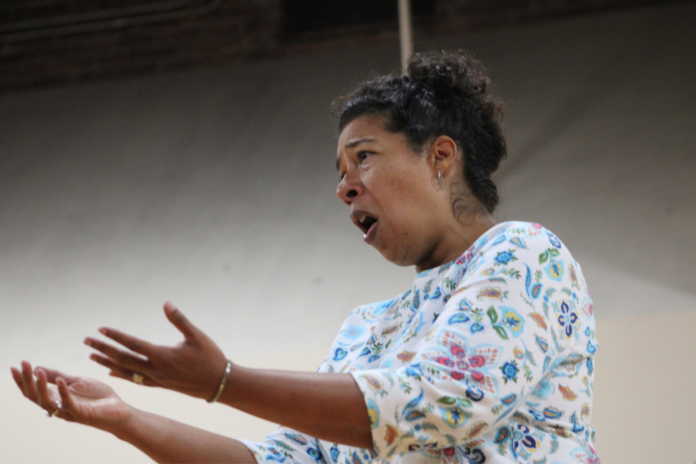
Mary Elizabeth Williams, a celebrated American soprano who divides her time between Italy and the States, makes her debut with Toledo Opera as Aida. When asked how she crossed paths with Toledo Opera, Williams says one of her closest friends teaches at BGSU, and she started guest teaching for Master Classes. Through that experience, she met Kevin Bylsma who works at both BGSU and Toledo Opera. Williams says that while in Belgum recently on a different project, she happened to find a copy of the original story written by a French archeologist named Auguste Mariette. This is the same story that Verdi and his librettist used to base Aida on. “I was finally able to buy the story after not being able to find it for years. I always go through the libretto page by page again before singing a role. One of the things I find wonderful about any piece of literature is that it’s very much affected by the season in life that we are reading it in. My take on Aida when I first started singing it in my 30s is very different now that I’m 49. I think I owe it to Verdi and to opera to allow it to continue to change and flourish so that it reflects not only the eternal reality of the story, but my reality and the reality of the times we live in.”  She continues saying that the three main characters have an interesting arch. They become wiser, and some don’t make it out alive, but they understand things about themselves like what they’re willing to sacrifice and, not only what love means, but what it means to them.


RELATED: Humanity Meets AI in New Play, “Is Anybody There?


Playing the Iconic Aida

What Williams loves about singing this role is that there are beautiful musical moments throughout the entire opera, not just one or two scenes. She explains, “There are some roles where I’m just working up to that one scene I love, but I don’t feel that way about Aida. Every time my character is on stage there’s good music and interesting moments — especially the duets. I have great duets with all the main characters. My favorite kind of singing are duets and trios, because that’s when you’re exchanging emotional energy through dialogue. In opera we talk a lot about arias (monologue which the singer performs as a solo), but that’s actually my least favorite part. I love collaborating and we have great moments for that in this opera.” When asked about the most challenging part of this role, her answer was not what you might expect. “I spend most of my time on stage on my knees. I’m an enslaved prisoner of war, so it’s appropriate. Sometimes singers choose not to be as much on their knees as the role requires but I can’t even if I wanted to because I’m 6’1” and I would look too powerful when standing. The first week of rehearsals my thighs are always on fire!”

In addition to the special place Aida has in Toledo Opera’s history, it also happens that a production of Aida is how Williams met her Italian husband, also an opera singer. Maybe there’s just something magical that has made Aida endure in its many incarnations.

The Toledo City Paper depends on readers like you! Become a friend today. See membership options

This October Toledo Opera welcomes Aida back to the stage. It’s been ten years since the opera has been performed, and it is the opera that launched the company in 1959. Guiseppi Verdi’s epic masterpiece with themes of love, loss, and sacrifice has one of the most recognizable names in and outside of the opera world. In 2000 a reimagining of the story was created as a Broadway show written by Elton John and Tim Rice, starring Adam Pascal (Rent) and introduced Aida to a millennium audience. 

The titular Aida is an Ethiopian princess captured and enslaved in Egypt. She is secretly in love with Radames, an Egyptian military commander, leading his army against her country. Because no opera would be complete without a live triangle, the daughter of the Egyptian king Ameris is also in love with Radames. Part of the opera’s enduring appeal is its ability to include large chorus and ensemble pieces while retaining a very intimate love story at its center.

Soprano Mary Elizabeth Williams on Aida 

Mary Elizabeth Williams, a celebrated American soprano who divides her time between Italy and the States, makes her debut with Toledo Opera as Aida. When asked how she crossed paths with Toledo Opera, Williams says one of her closest friends teaches at BGSU, and she started guest teaching for Master Classes. Through that experience, she met Kevin Bylsma who works at both BGSU and Toledo Opera. Williams says that while in Belgum recently on a different project, she happened to find a copy of the original story written by a French archeologist named Auguste Mariette. This is the same story that Verdi and his librettist used to base Aida on. “I was finally able to buy the story after not being able to find it for years. I always go through the libretto page by page again before singing a role. One of the things I find wonderful about any piece of literature is that it’s very much affected by the season in life that we are reading it in. My take on Aida when I first started singing it in my 30s is very different now that I’m 49. I think I owe it to Verdi and to opera to allow it to continue to change and flourish so that it reflects not only the eternal reality of the story, but my reality and the reality of the times we live in.”  She continues saying that the three main characters have an interesting arch. They become wiser, and some don’t make it out alive, but they understand things about themselves like what they’re willing to sacrifice and, not only what love means, but what it means to them.


RELATED: Humanity Meets AI in New Play, “Is Anybody There?


Playing the Iconic Aida

What Williams loves about singing this role is that there are beautiful musical moments throughout the entire opera, not just one or two scenes. She explains, “There are some roles where I’m just working up to that one scene I love, but I don’t feel that way about Aida. Every time my character is on stage there’s good music and interesting moments — especially the duets. I have great duets with all the main characters. My favorite kind of singing are duets and trios, because that’s when you’re exchanging emotional energy through dialogue. In opera we talk a lot about arias (monologue which the singer performs as a solo), but that’s actually my least favorite part. I love collaborating and we have great moments for that in this opera.” When asked about the most challenging part of this role, her answer was not what you might expect. “I spend most of my time on stage on my knees. I’m an enslaved prisoner of war, so it’s appropriate. Sometimes singers choose not to be as much on their knees as the role requires but I can’t even if I wanted to because I’m 6’1” and I would look too powerful when standing. The first week of rehearsals my thighs are always on fire!”

- Advertisement -

In addition to the special place Aida has in Toledo Opera’s history, it also happens that a production of Aida is how Williams met her Italian husband, also an opera singer. Maybe there’s just something magical that has made Aida endure in its many incarnations.

Recent Articles

Our Latest Digital Issue

Toledo City Paper
Privacy Overview

This website uses cookies so that we can provide you with the best user experience possible. Cookie information is stored in your browser and performs functions such as recognising you when you return to our website and helping our team to understand which sections of the website you find most interesting and useful.