The Toledo City Paper depends on readers like you! Become a friend today. See membership options
Jazz looms just as large in the Toledo zeitgeist as Jeep and Tony Packo’s.
The upcoming Glass City Jazz Festival salutes this great American tradition, featuring jazz luminaries both local (the legendary Jean Holden) and national, including acclaimed musician and author RiShon Odel, Akira Tana and Otonowa, Straight Ahead, and the Vinicius Gomes Quintet featuring SongYi Jeon.
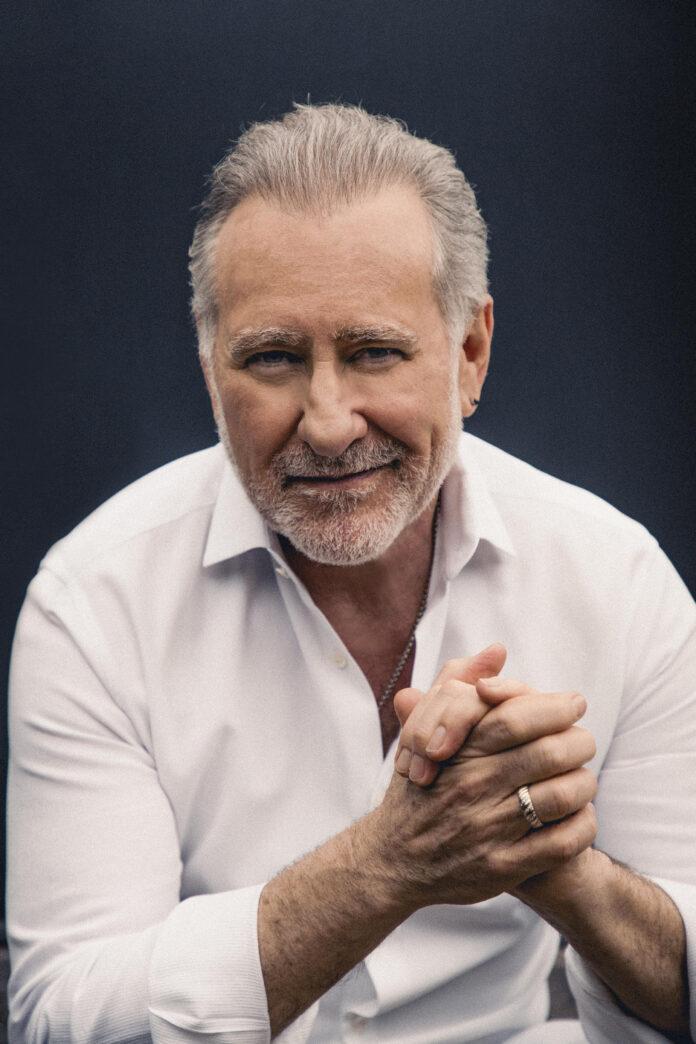
Internationally renowned jazz great Brian Bromberg headlines the Glass City Jazz Festival, Saturday, August 9 from 12:30 p.m. until sunset at the Glass City Metropark, 983 Front St. Admission is free. Bring a lawn chair and enjoy the day.
 Brian Bromberg
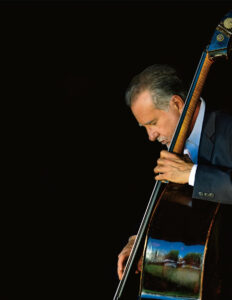
At one point while interviewing jazz musician Brian Bromberg, he says “I’m not a star.” He’s lying. This cat shines like Polaris. The headliner for the Glass City Jazz Festival, Bromberg has appeared on the soundtracks to such films as “The Fabulous Baker Boys” and “The Preacher’s Wife” while working with Sting to Michael Buble to Herb Albert. A true musical genius, Bromberg is to the piccolo bass what Paganini was to the violin. A native of Tuscon, Arizona, Bromberg has been kicking around in the international jazz scene for four decades and shows no sign of slowing down. The man has paid tribute to player from Jimi Hendrix to Prince (find his song “Minneapolis, 1987” on YouTube and prepare to be wowed.) His latest musical creation is a fascinating salute to legendary jazz bassist Scott LaFaro. City Paper got Bromberg on the phone to discuss his long and varied career.
Your new album pays tribute to the late, great bassist Scott LaFaro. What made you decide to devote an entire album to memorializing Scott’s work?
It actually wasn’t my idea at all. It was King Records in Japan that came up with that idea; I’ve made a lot of re- cords for them and my buddy Susumu Morikawa came to me and said “Hey, man, I want you to do a Scott LaFaro tribute album.” I told him, “No way. The jazz police and the bass police would be all over me if I did that.” And he said, “No, man, you have to do it. You’re the only one who can.” I went back and listened to a bunch of Scott’s old recordings and it really dawned on me how much I had been influenced by Scott’s playing. Scotty was just this fearless freak who was so far ahead of his time. Nobody played like him. People didn’t know what to make of him. There’s nothing about my playing that sounds like Scott, but his approach to the instrument—techincally, melodically, and rhythmically—really had an impact on me. So I agreed to do the record and I’m really glad I did.
You have your own line of basses through Keisel/Carvin. Did you design that bass yourself?
Yeah, I did the first round of design of that instrument when I was a kid in 1981, sitting on the floor of my apart- ment in San Diego. Over the years, the instrument just evolved. It’s really ergonomic on how it fits your body—the weight, the balance, the access to the finger boards. I’m a player first, so if it’s comfortable for me, it will be comfortable for somebody else. Keisel helped me tweak it and refine it, and they do a great job. It’s American-made, they’re in North County, San Diego, and they do a fantastic job.
In four decades, you’ve worked with everyone from Sting to Michael Buble to Herb Albert. Who is someone you always wanted to work with but haven’t?
Oh, man. Not to sound morbid but everyone who’s great who died and I never got a chance. When I was 18, I had an opportunity to play with Bill Evans. He invited me to play an entire set at the Village Vanguard, but I was so insecure and freaked out that I just couldn’t do it. That’s a huge musical regret of mine. I wish I could have played with Buddy Rich because I grew up a drum- mer. As a bass player I think I would’ve been great with him. I’d love to play with Pat Metheny; actually, he wanted me to join his band many few years ago, but I had commitments and I couldn’t do it. There are players who really bring something unique to the table, and it would be amazing to play just one song with them. When you play with someone at that level, even just one song, it will change your life.
You played on the soundtrack to “The Fabulous Baker Boys,” What was that experience like?
It was crazy. That was my first big L.A. recording date. I had no idea it was going to be that kind of session. It turned out to be this great jazz score. It was the A-team of the A-team of session musicians. The music was so cool, and it was a wonderful experience.
I have a funny story from that session. Those kind of sessions are really expensive—you’re on the clock, there’s unions. There was this one song that was a fast bebop tune and I had to do a bass solo, and I totally destroyed it, so I’m pleading with Dave (Grusin), “Dave, please let me do one more take!” Dave’s standing there looking at his watch, and tells me “OK, you have one more take, that’s it.” And I say to myself, “OK, you’ve got 45 seconds of glory, you better make it work.” I had to do it as an overdub, so the entire orchestra is looking at me while I play, and I had one shot to do my solo and that’s what ended up on the record. I was a nervous wreck, but it turned out great.
Have you ever performed in Toledo before?
I’ve never played in Toledo, but you know what’s funny is that I have a big following in Ohio. Playing in Ohio is really cool because I know I have a fanbase there, and it’s always neat to play somewhere where people know who you are. I’m not a star, but that’s a good feeling.
Glass City Jazz Festival, free general admission, 12:30pm-10pm, Saturday, Aug. 9, Glass City Metropark, 983 Front St., glasscityjazzfest.com